Together and Apart
2025
Galvanized Steel, Polycarbonate, Wood, Photo on Mylar, Canvas, Paper, Projection
12' x 8' x 4
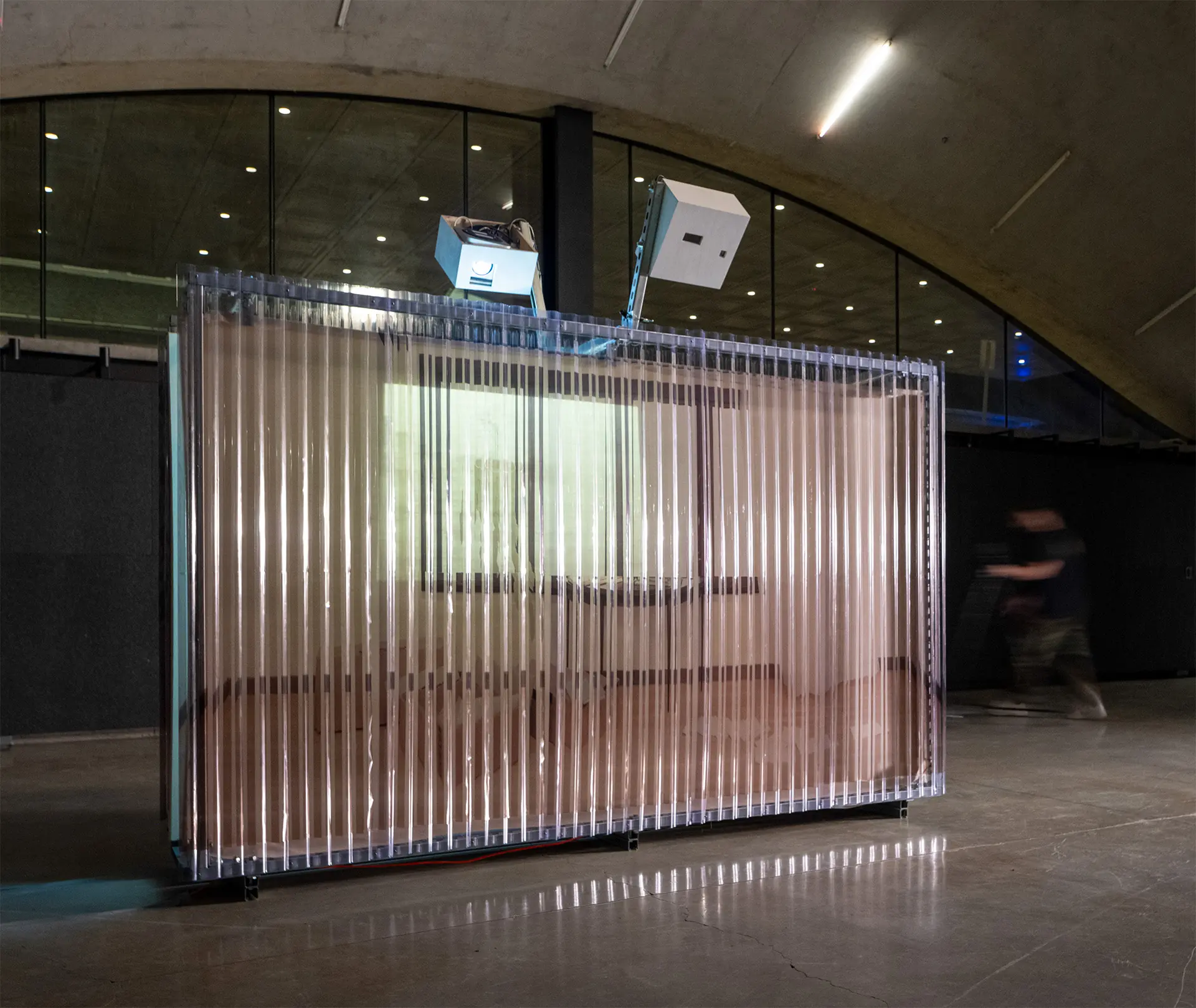
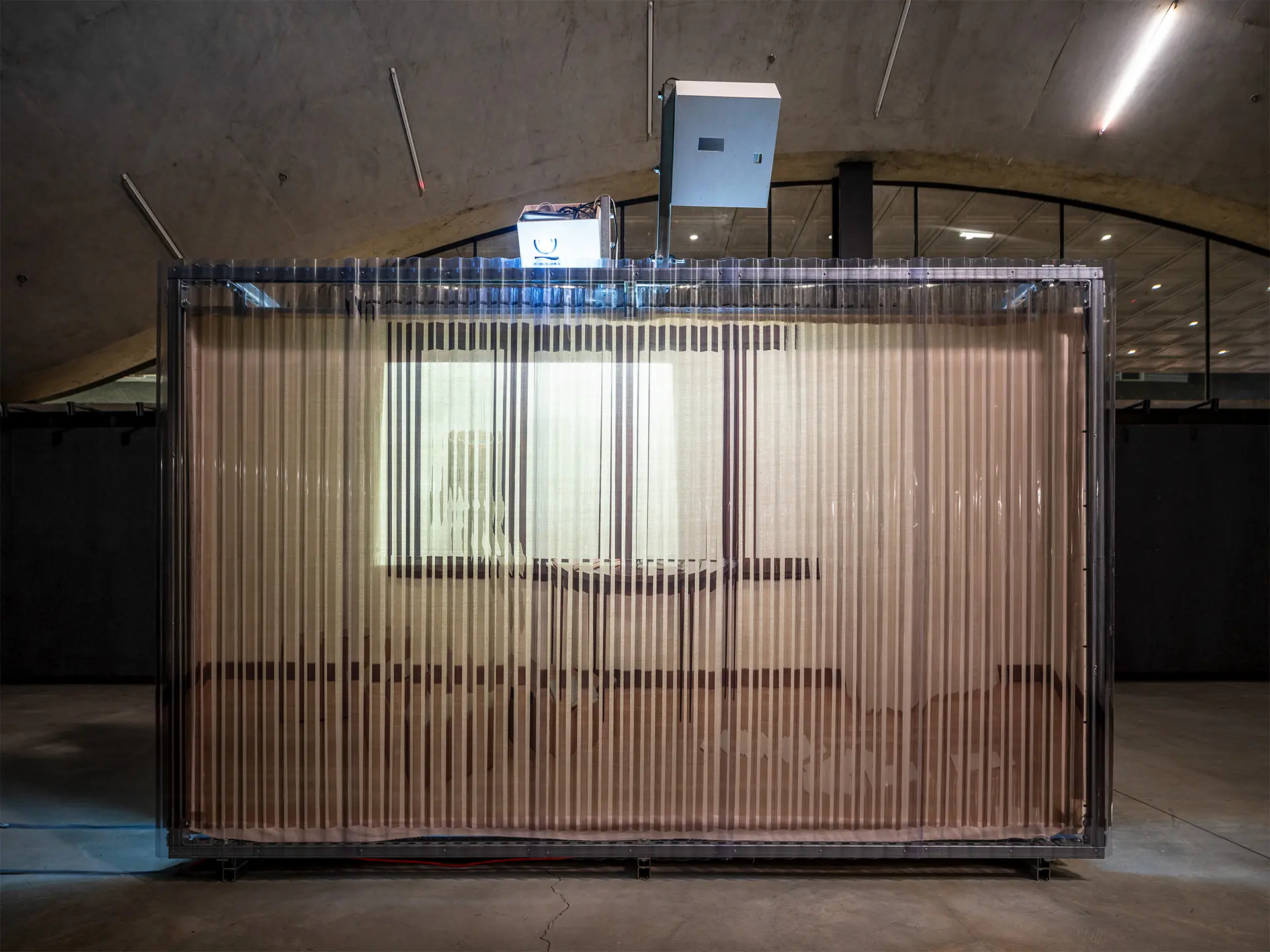
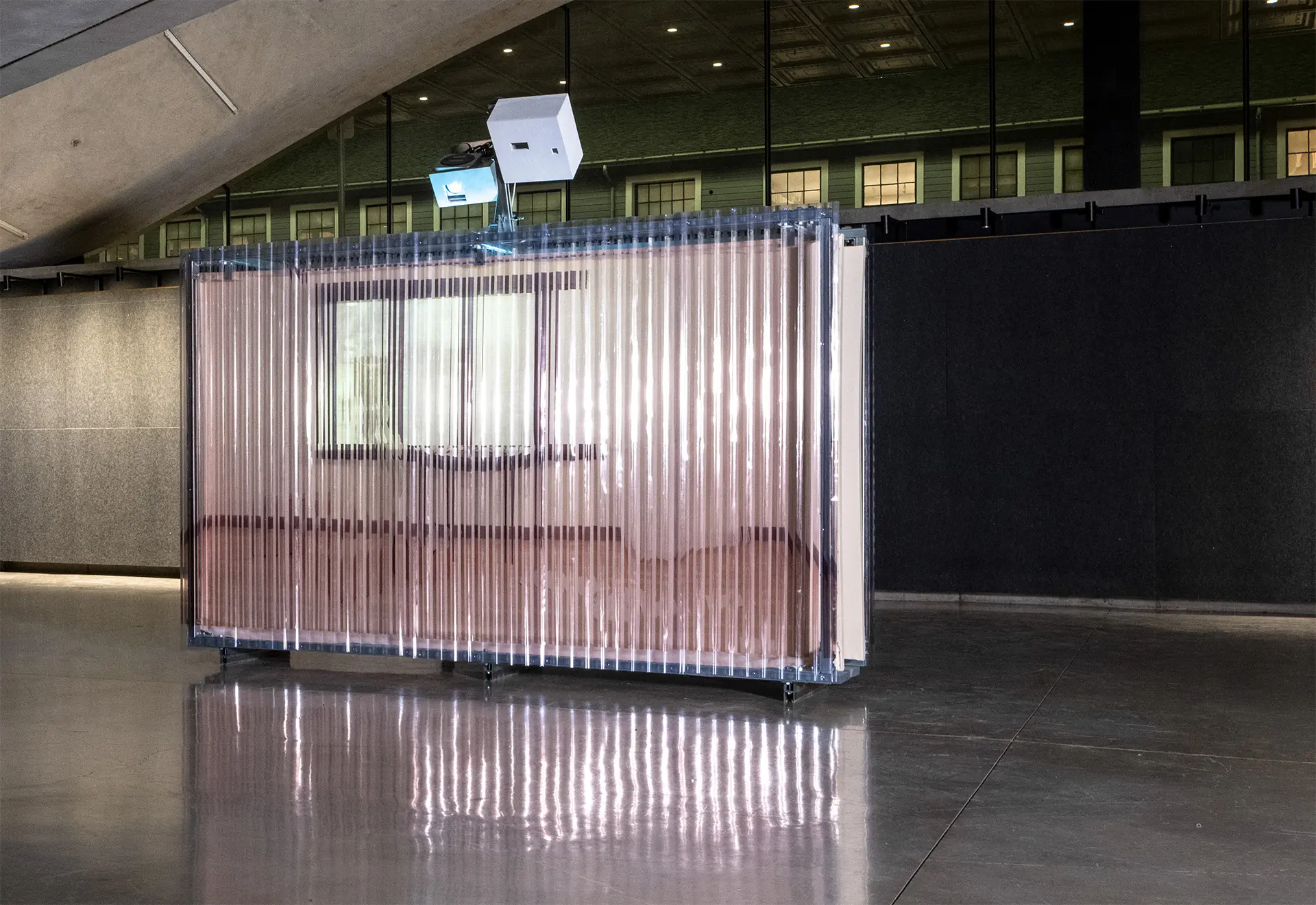
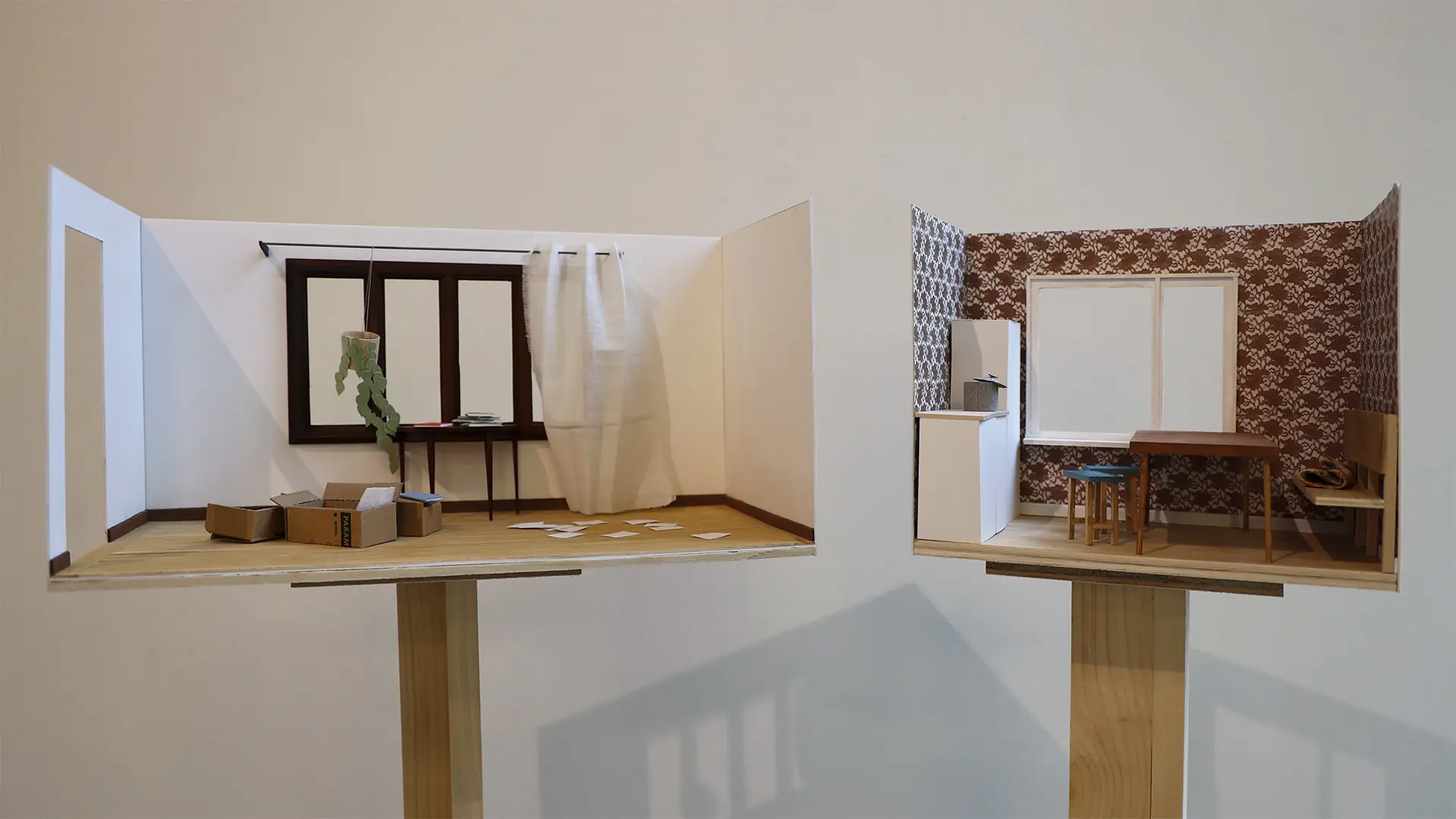
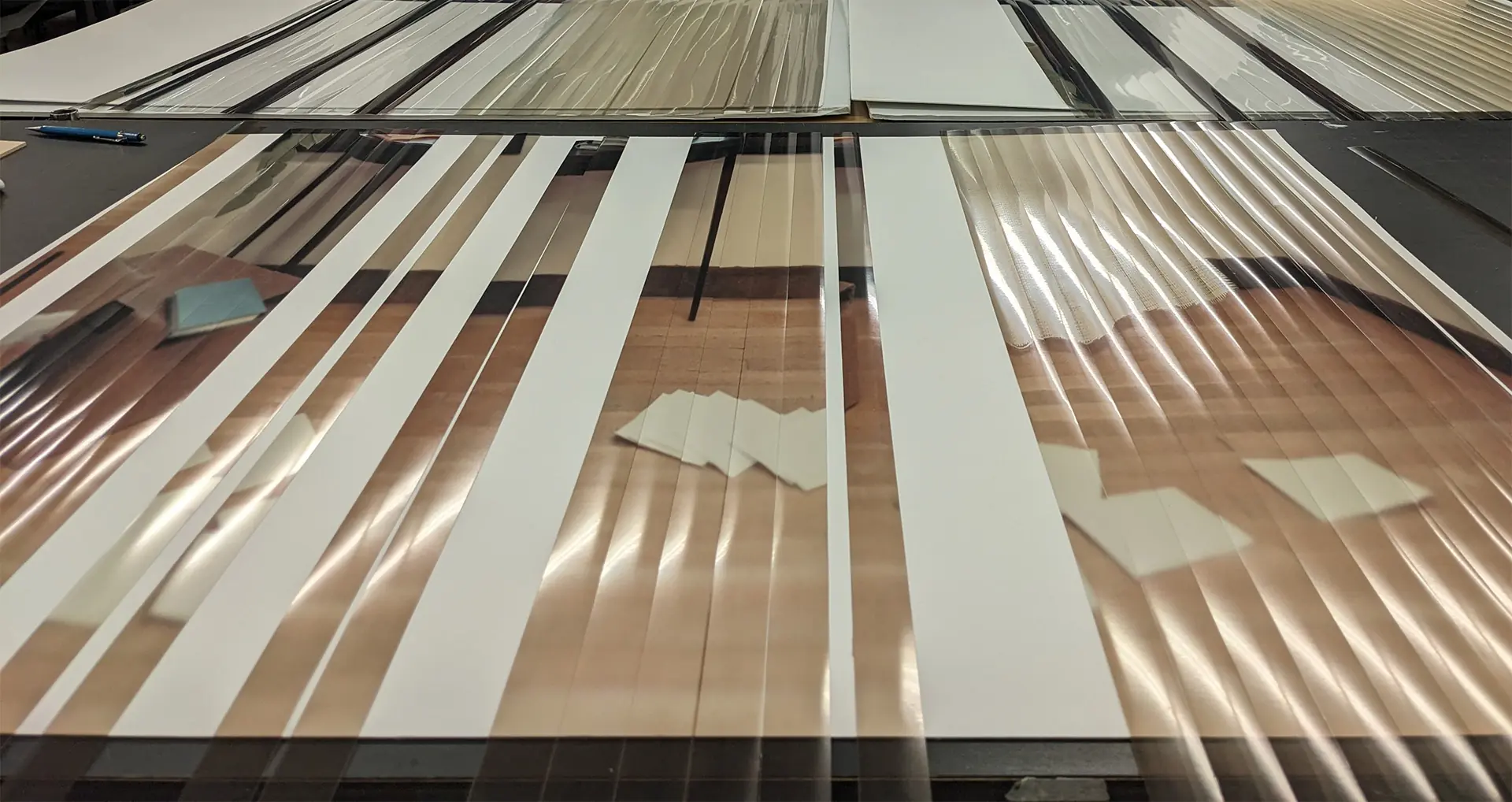
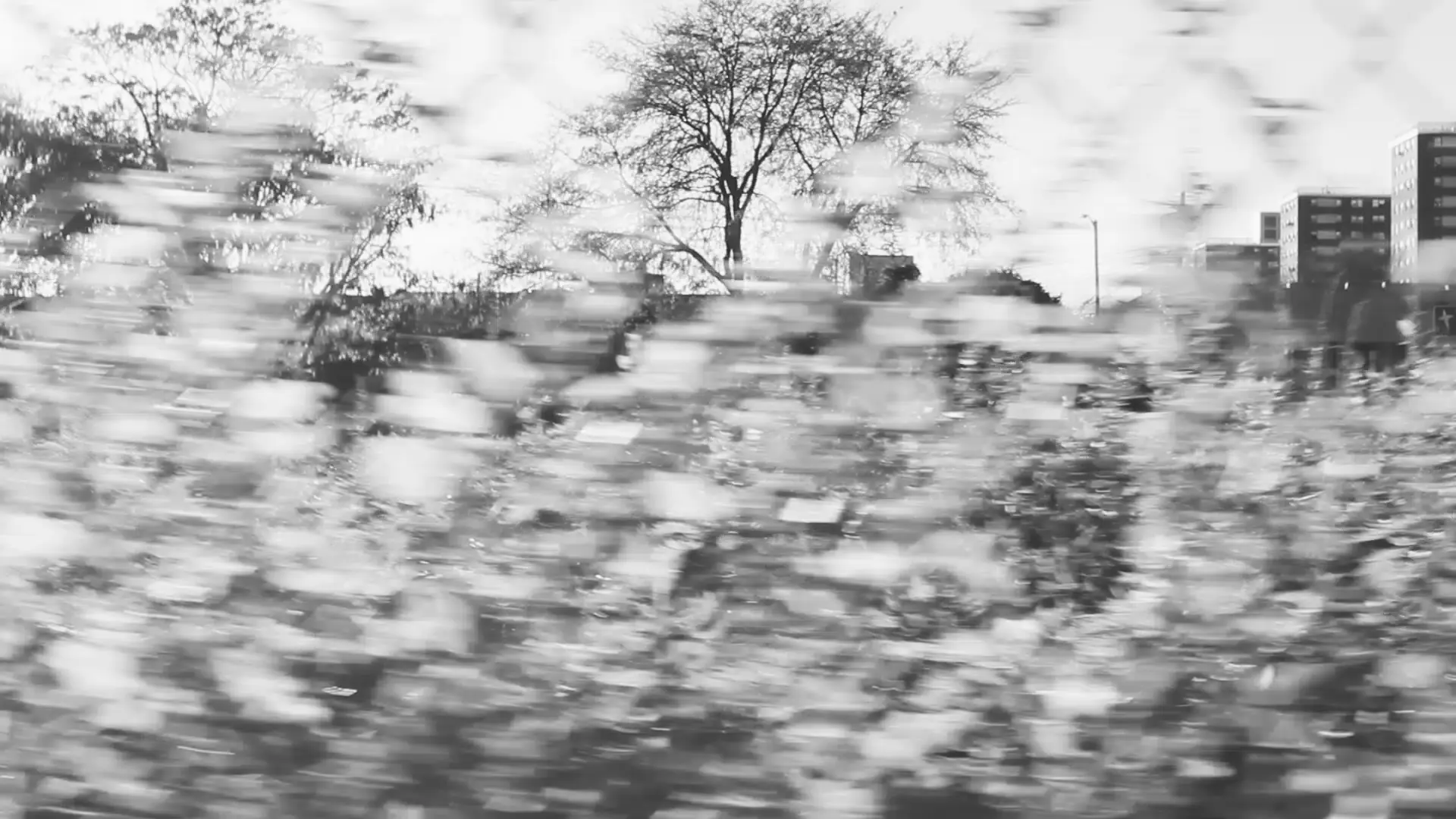
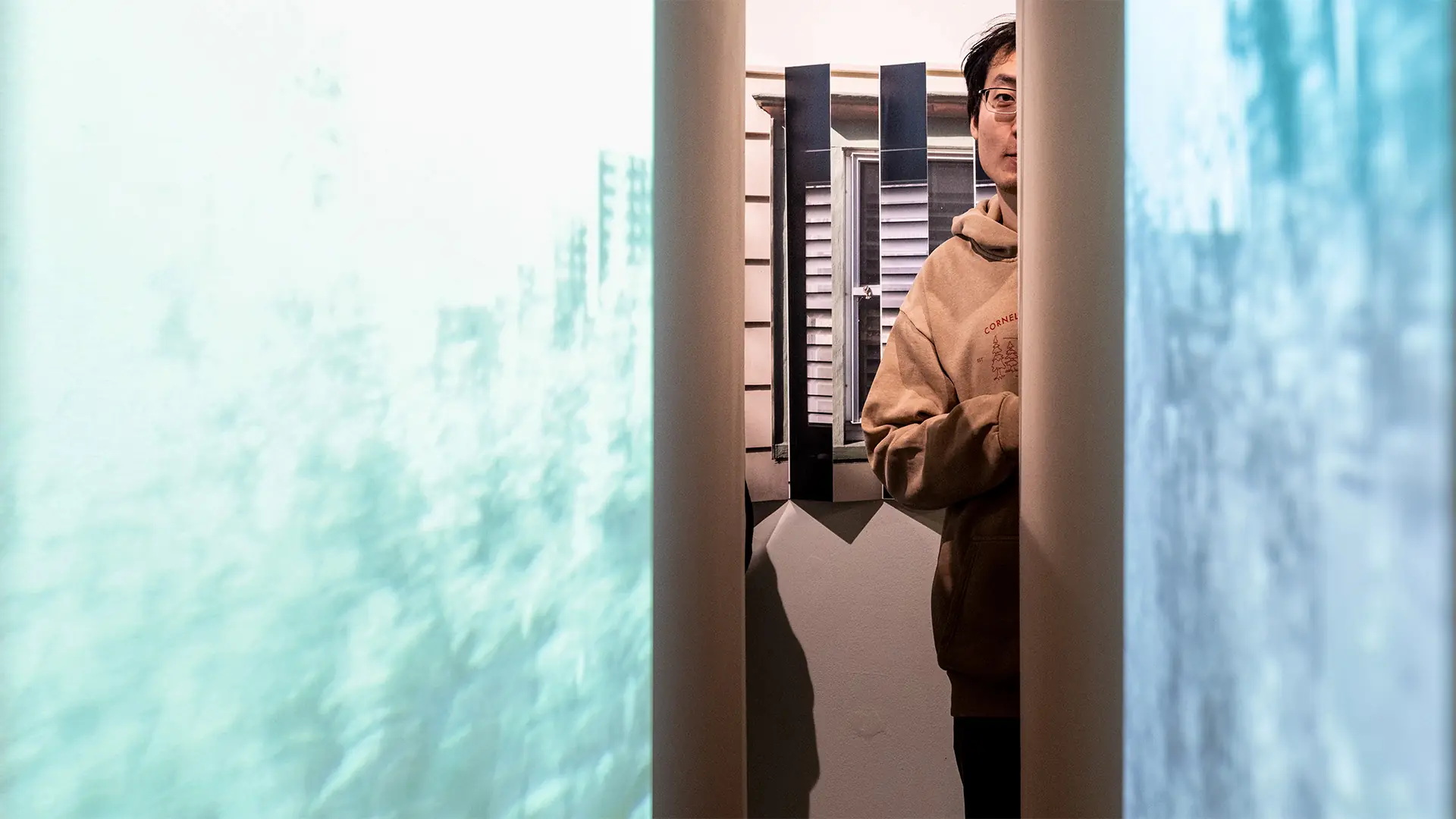
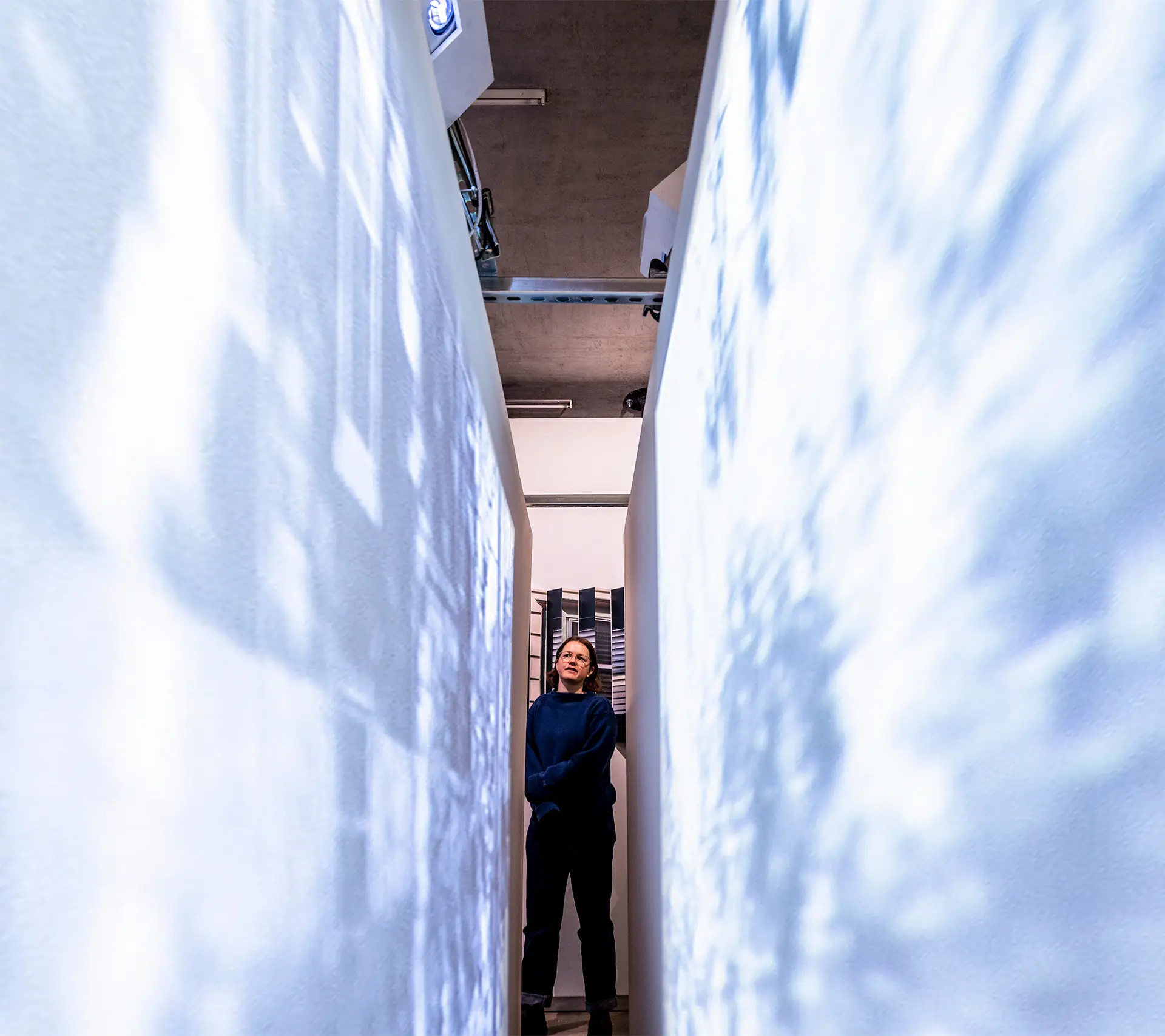
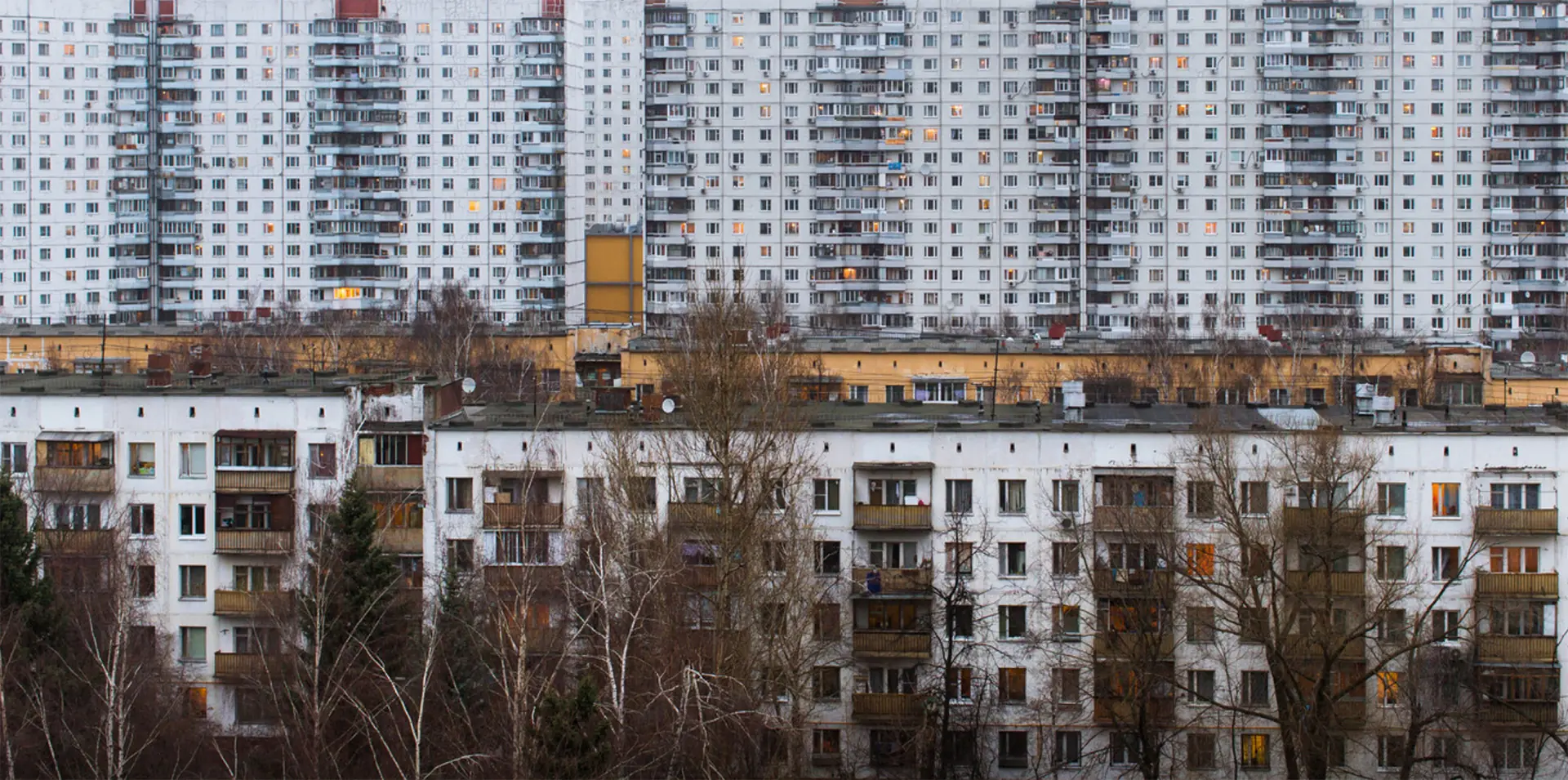
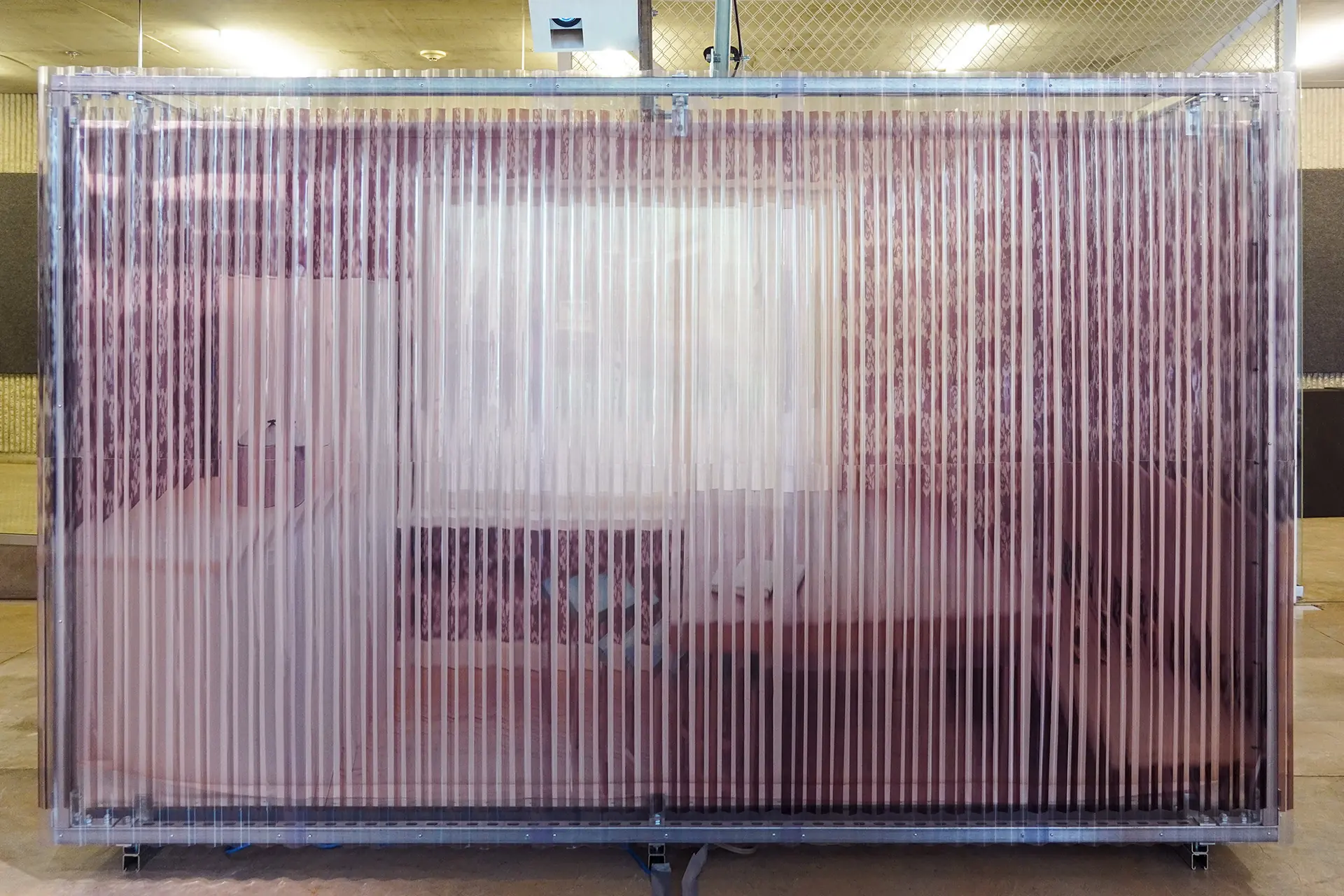
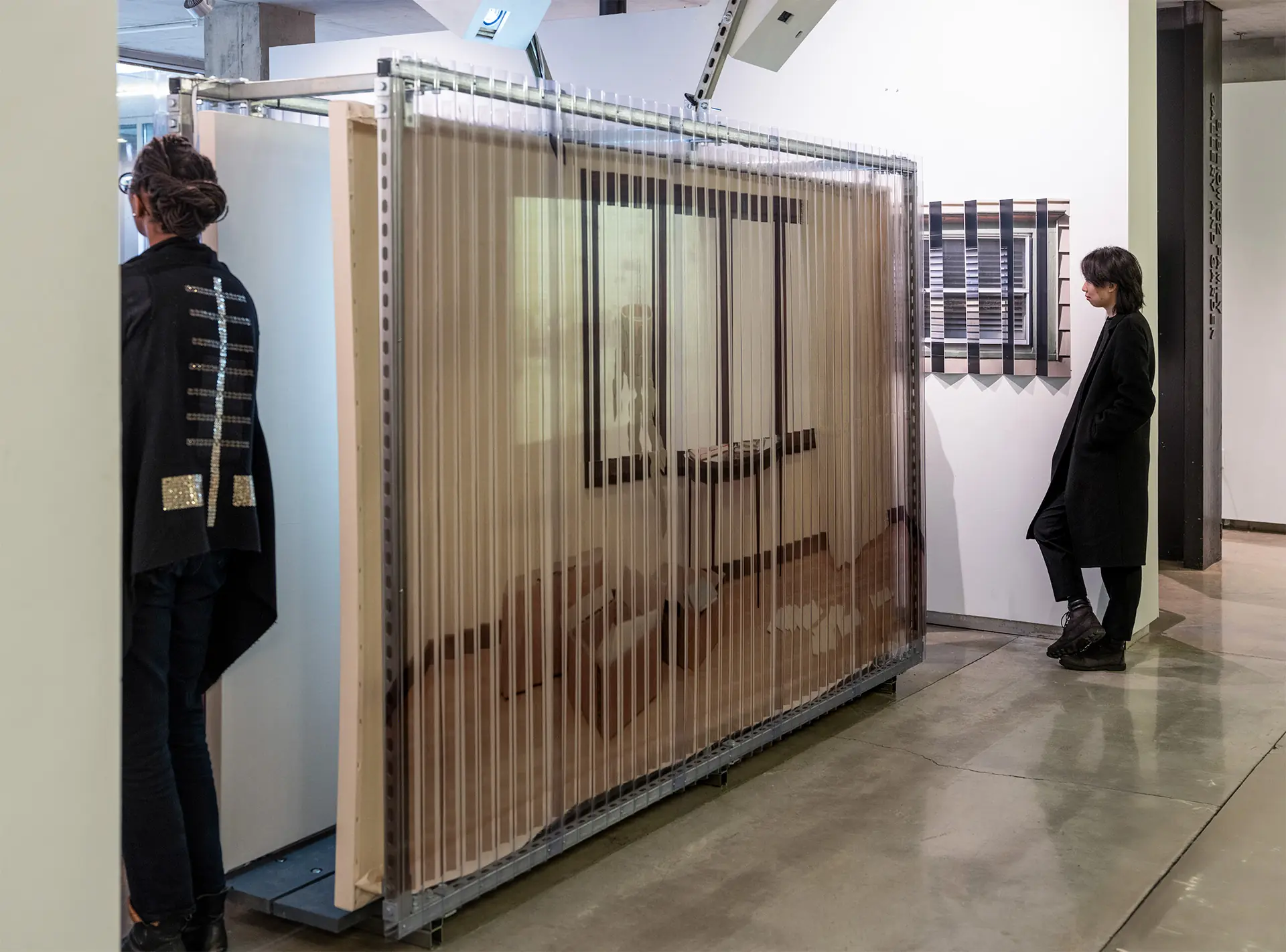
The piece consists of two large lenticular prints on transparent panels facing outward from one another suspended on a metal frame. Each lenticular print is assembled from two images of an interior room either filled with objects or empty; the effect activates when the viewer moves around the exterior of the installation. The images are composed of photographs of physical models of interiors I grew up in - one side is a Soviet apartment in Moscow and the other is a suburban house in Minnesota. The domestic interiors are centered on windows looking outward in the image-space, while looking inward in the physical space of the installation. The panels create a narrow atrium between them, within which are two facing canvases onto which films are projected, depicting movement through an urban and suburban landscape. The films can be seen by peering into the atrium from the side, and through the image-windows from the exterior of the work, giving the interiors added transience, reminiscent of traveling train cars.
Whereness is the subject and product of this work. Where is home? Where does one fit? Where can you locate the interior? The piece constructs an inversion of the interior and exterior, where the image interiors are located on the exterior of the installation, while the projected films create a transient space of movement on the physical interior of the installation. Within this transitory condition, the inward and externalized collide. By inverting the interior and exterior using the juxtaposition of image space and physical space, the viewer is subject to constant relocation from interiority to exteriority. And while one might typically consider a room as static, we get to see that static space in transit and to ponder how every space is ultimately subject to the exiles of time. The work is a theater of the transitory, just as every home is a theater for location, relocation, and dislocation. Architecture has solidity, but there is always a constant whoosh. The piece has a heart that is constantly decentered and revolved, churning and quivering.
This is an architecture that functions as a question. How can architecture speak about rootedness and belonging? The work uses the personal as a vehicle to ask larger questions about the social: a launchpad to think about selfhood and belonging, negotiation of inside and outside, time and exile, surfaces and skins, and the quality of these skins. The corrugated image is a skin between an implied self and the other, and this work troubles this relationship. The body scrapes against the image and the space between. Seeing becomes physical - an act of squeezing through, whether fitting or not fitting, a perpetual negotiation between inside and outside that defines being human, and in-turn proposes an architecture that is based on interiority and carries opacity - in the Glissantian sense - in which islands can coexist as archipelagos, both together and substantively autonomous. While the image-windows face one another and connect to an atrium, it is the experiential that produces the veil of opacity in between the two interiors.