
J. Irwin and Xenia S. Miller Prize at Exhibit Columbus
Columbus, Indiana
2021
Dream The Combine Principals: Jennifer Newsom and Tom Carruthers
Role: Narrative Research, Concept, Design, Fabrication
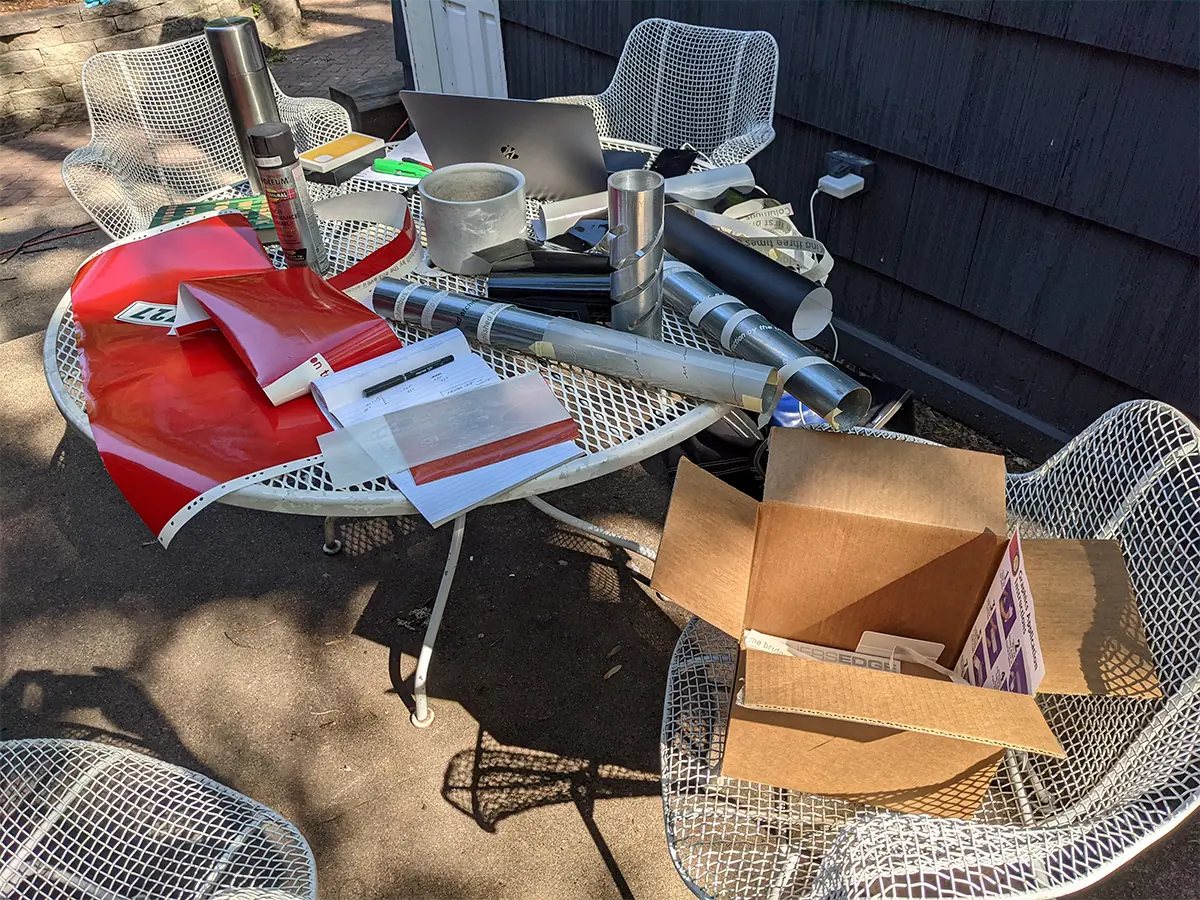
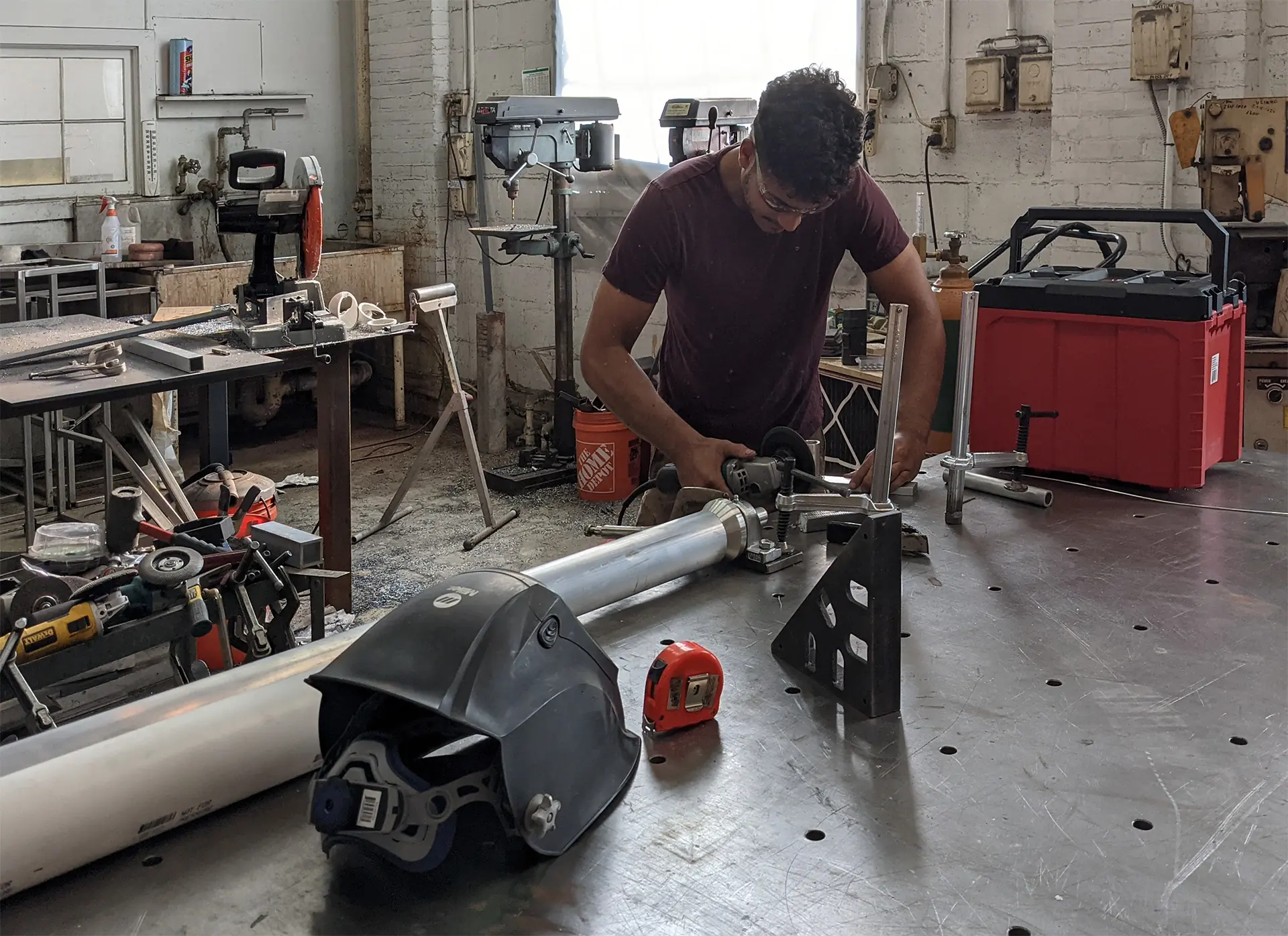
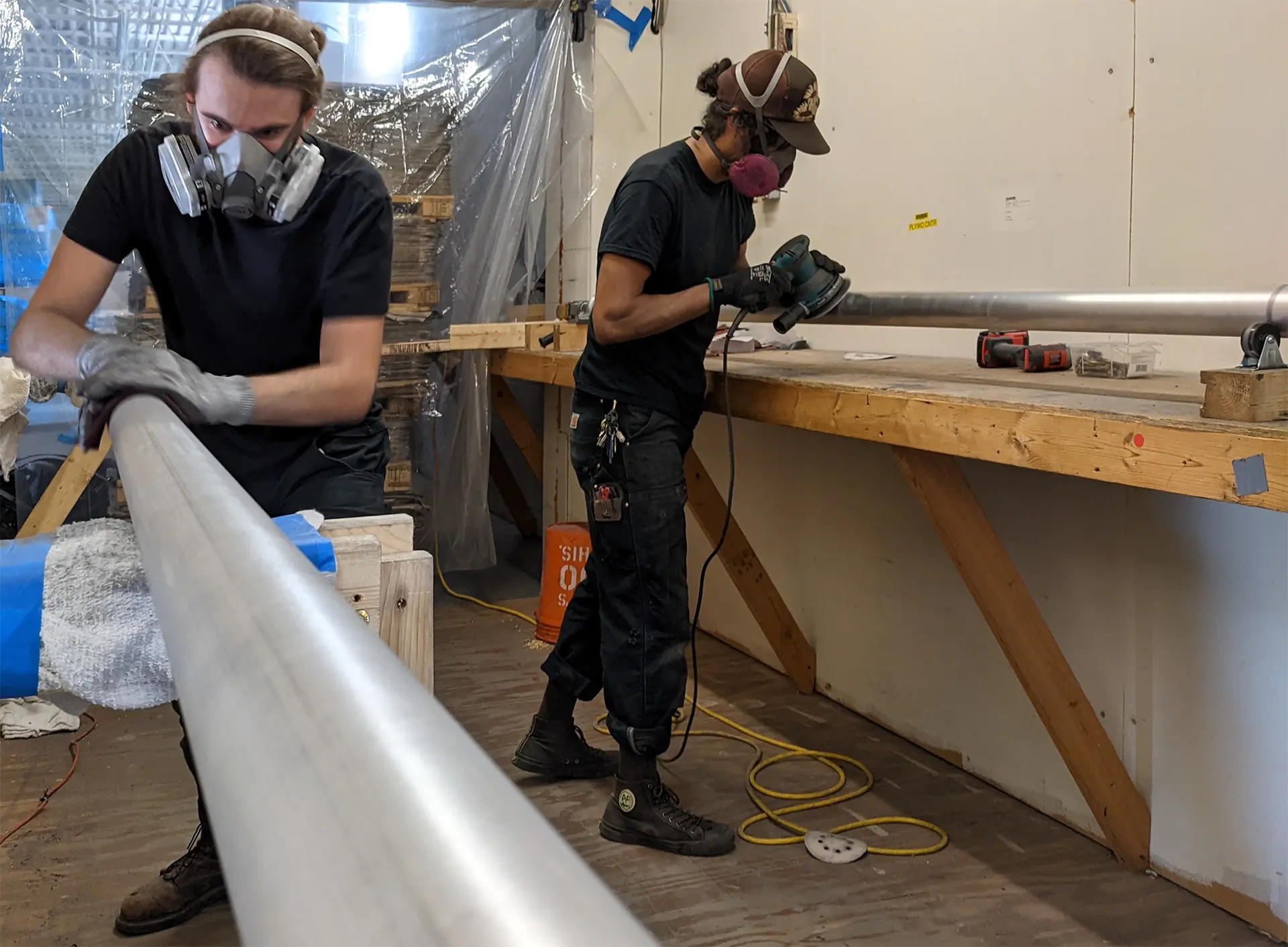
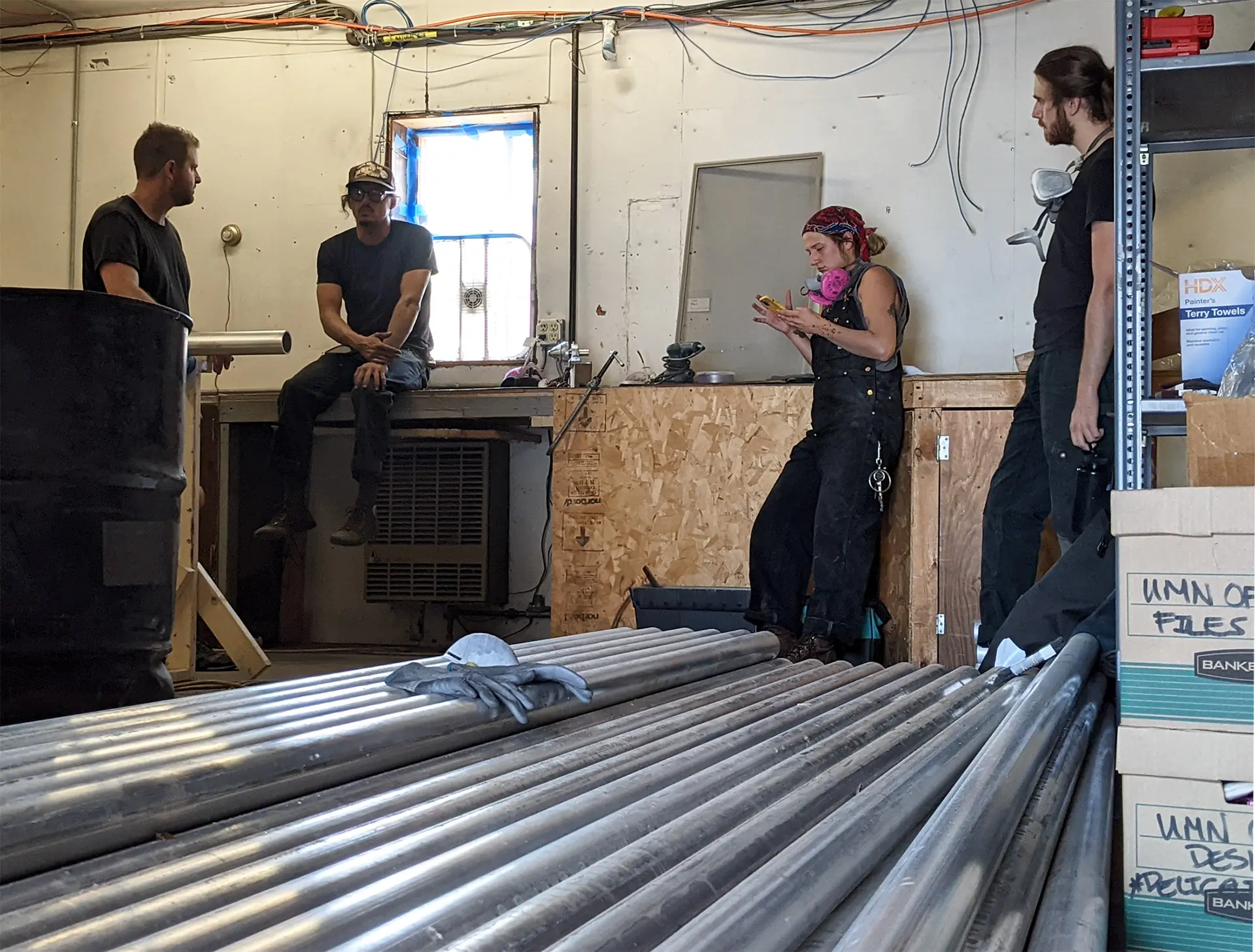
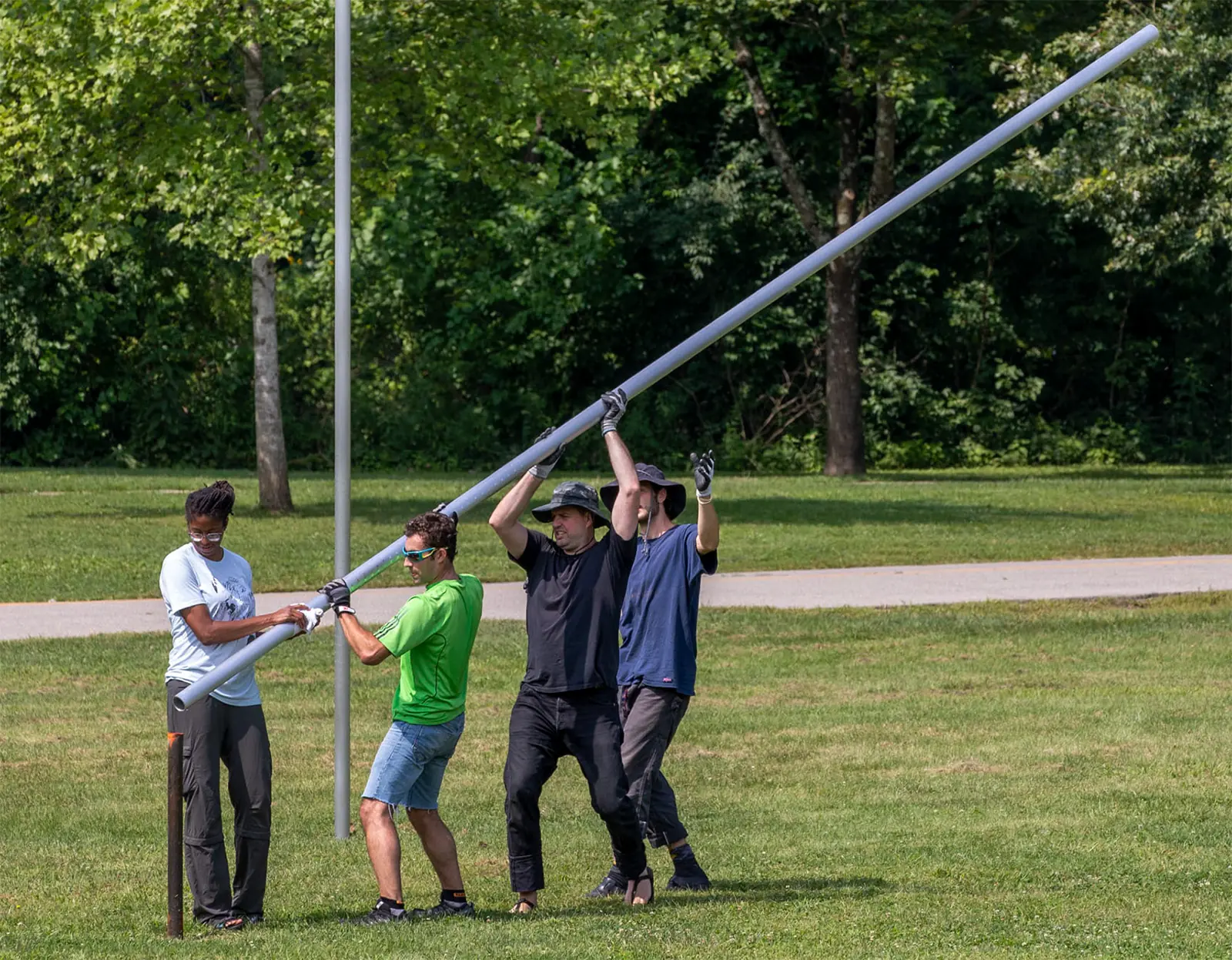
Curated by Mimi Zeiger and Iker Gill. Narrative Research, Concept, Design: Kathlyn Kao. Fabrication and Installation: Bryan Burton, Ryan Hilbert, Vince Rubio, Andy Piercefield, Mike Butler, Kyle Ross of City of Columbus Public Works. Xai Vue, Erin Benesch, Emma Rader of Advantage Signs & Graphics. Surveying: Tim M. Allen of Independent Land Surveying Inc. Bo Jacobsson, Anthony Gage Lockhart, Zeus Richardson of Jacobsson Carruthers Steel, Garelick Steel, metal finishing and lettering: Derek Ronding, Kruz Karstedt, Taylor Crosby, Jamie Goldsborough, Bethany Ferril. ESL Spectrum Lighting, Tovey-Perry Co., Elizabeth Woolf, Katahdin Engineering. Documentation: Hadley Fruits, Isaac Gale. Anne Surak and Janice Shimizu of Exhibit Columbus. Mark Jones and Casey Ritz, City of Columbus Parks Department. Clayton Binkley, ODD Lot
This project was especially interesting to me because it encapsulates the messy and generative energy of the moment: an intersection of the disciplines of art, architecture, historical research, and postcolonial critique. There are a lot of questions raised about our methods, about what this project means as architecture in a time when we are at once reticent of authorship, material reality, and at the same time, have a strong desire to make things which will actively change the world. Can architecture function as postcolonial critique? How to combine the explicitly political and expressive in art? What does rigorous mean?
In my view there is a difference between how architects and artists approach authorship, even as they may be dealing with similar ideas and expressive potential. Artists tend to be more comfortable accepting their right to authorship as an unequivocal imperative, even if the work is concerned with historical material or narrative. Alternatively, architects subconsciously have a viewer in mind, probably stemming from our training and experience working with clients. This results in a discomfort surrounding subjective authorship - especially today - and therefore the desire to produce work which can be clearly explained, and following a systematic approach to historical material which we perceive as factual.
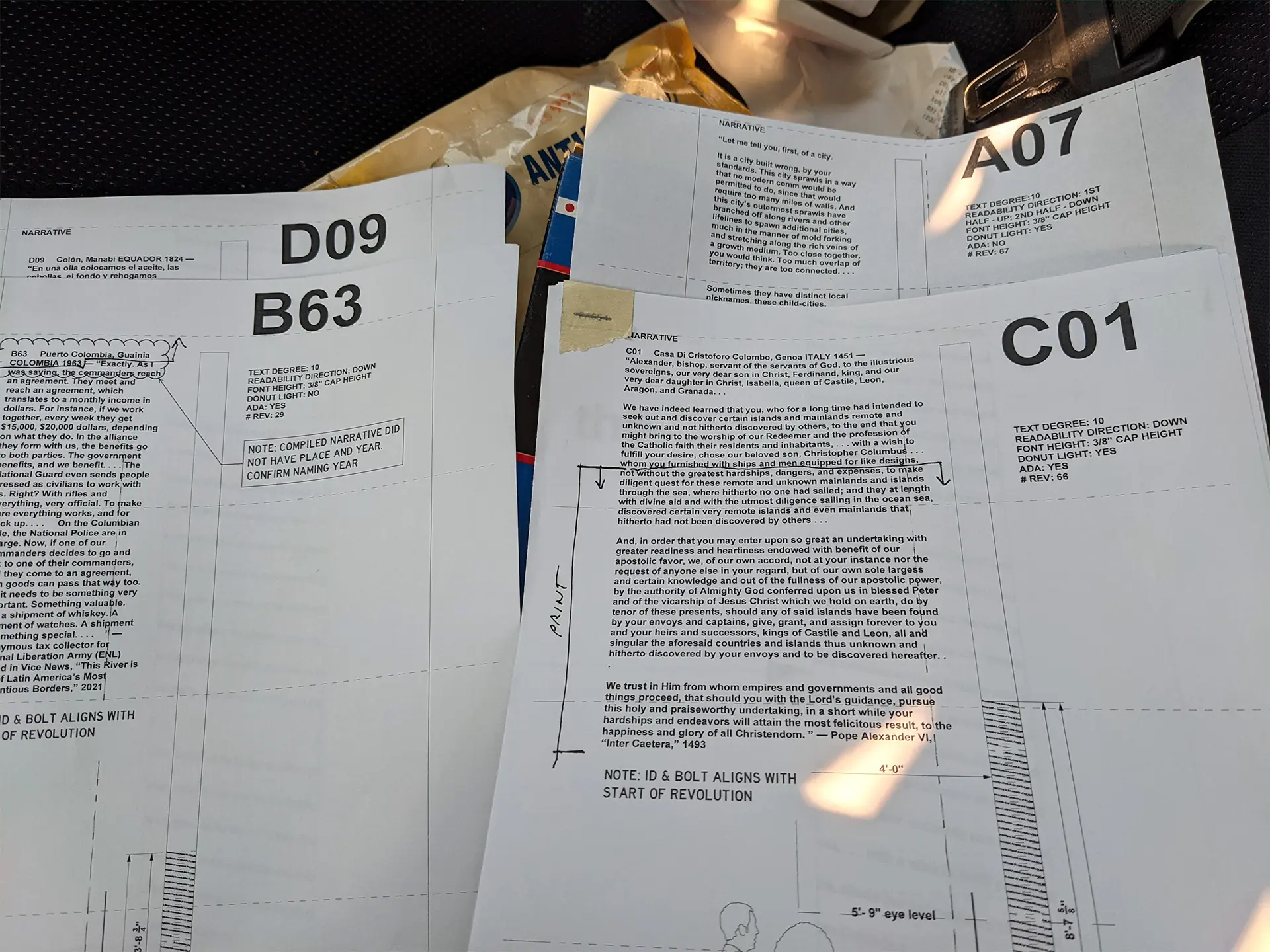
In attempting to tell a broad story of colonialism reflected in a specific placename such as Columbus, we made subjective decisions about what narratives to use and how to frame them. At first, this position was somewhat intimidating and unsettling to me, and not unsimilar to a field condition in architecture where there is a question about how to decide what and where, and at what point it coalesces into something meaningful. And as with any field condition, the importance of a good process is critical. We used archival research and historical methods for building narratives, but then we also had the ability as architects to find connections by producing our own maps. And some stories from these places we found instantly compelling, such as that of the enslaved architect Horace King (Columbus, Georgia), or Toni Morrison's (Columbia, Ohio) description of writing and memory. In telling marginalized histories, we also dealt with archival gaps, particularly in Latin America, where towns named Colón tend to be smaller and older; first-hand accounts are difficult to find. We used creative ways to tell these stories, by looking around the corner, keeping in mind historian Saidyia Hartman's Critical Fabulation approach to archival absence.
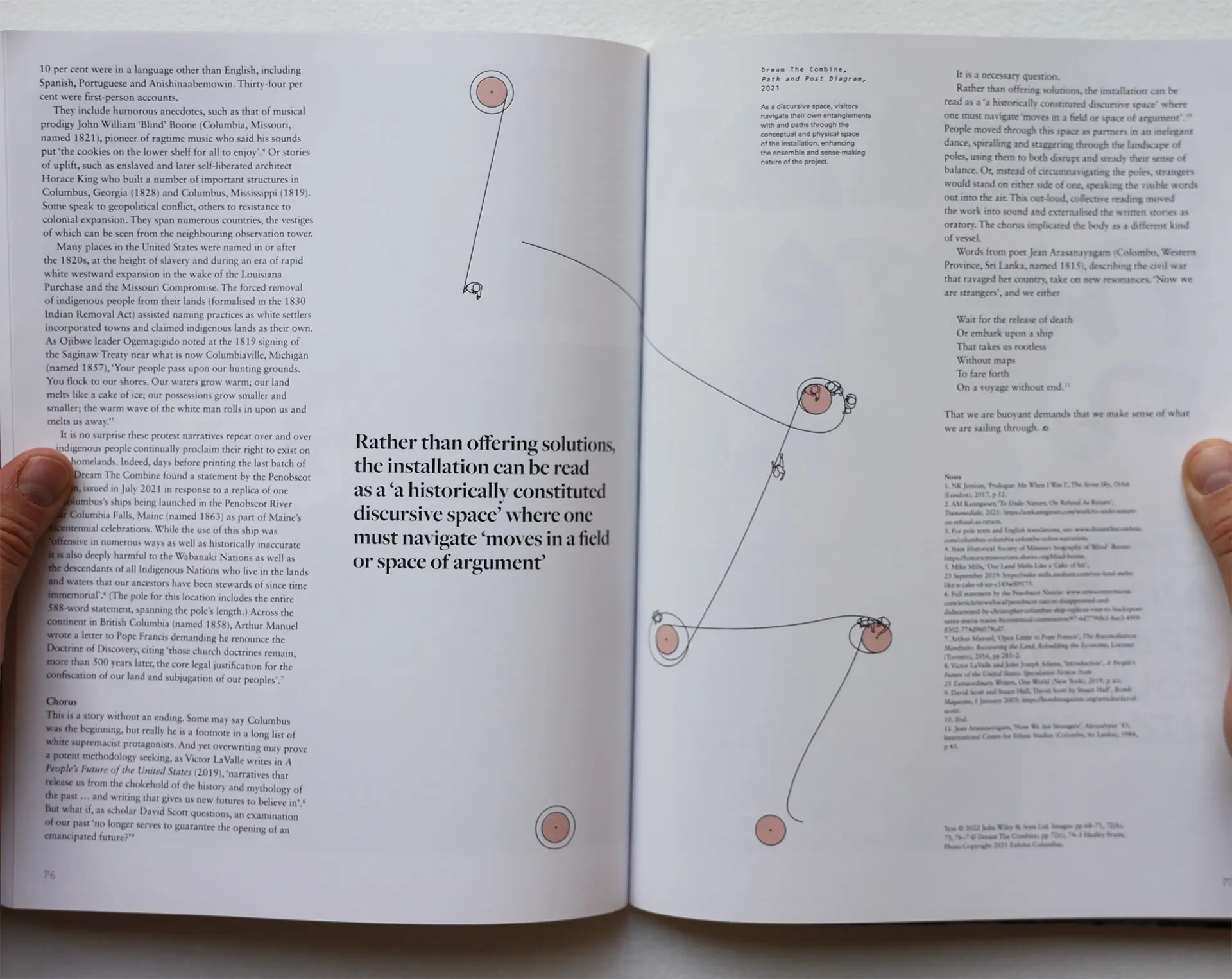
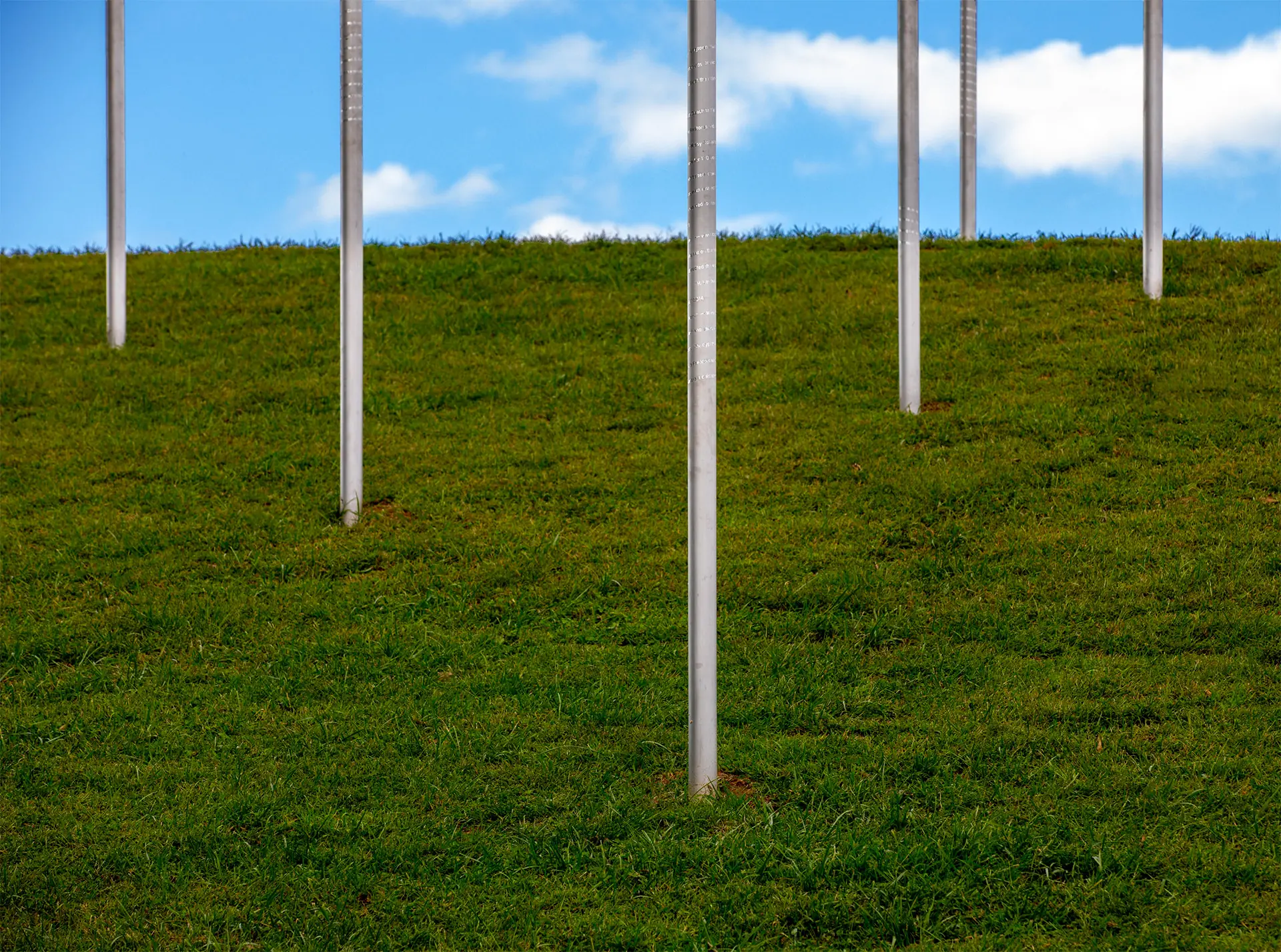
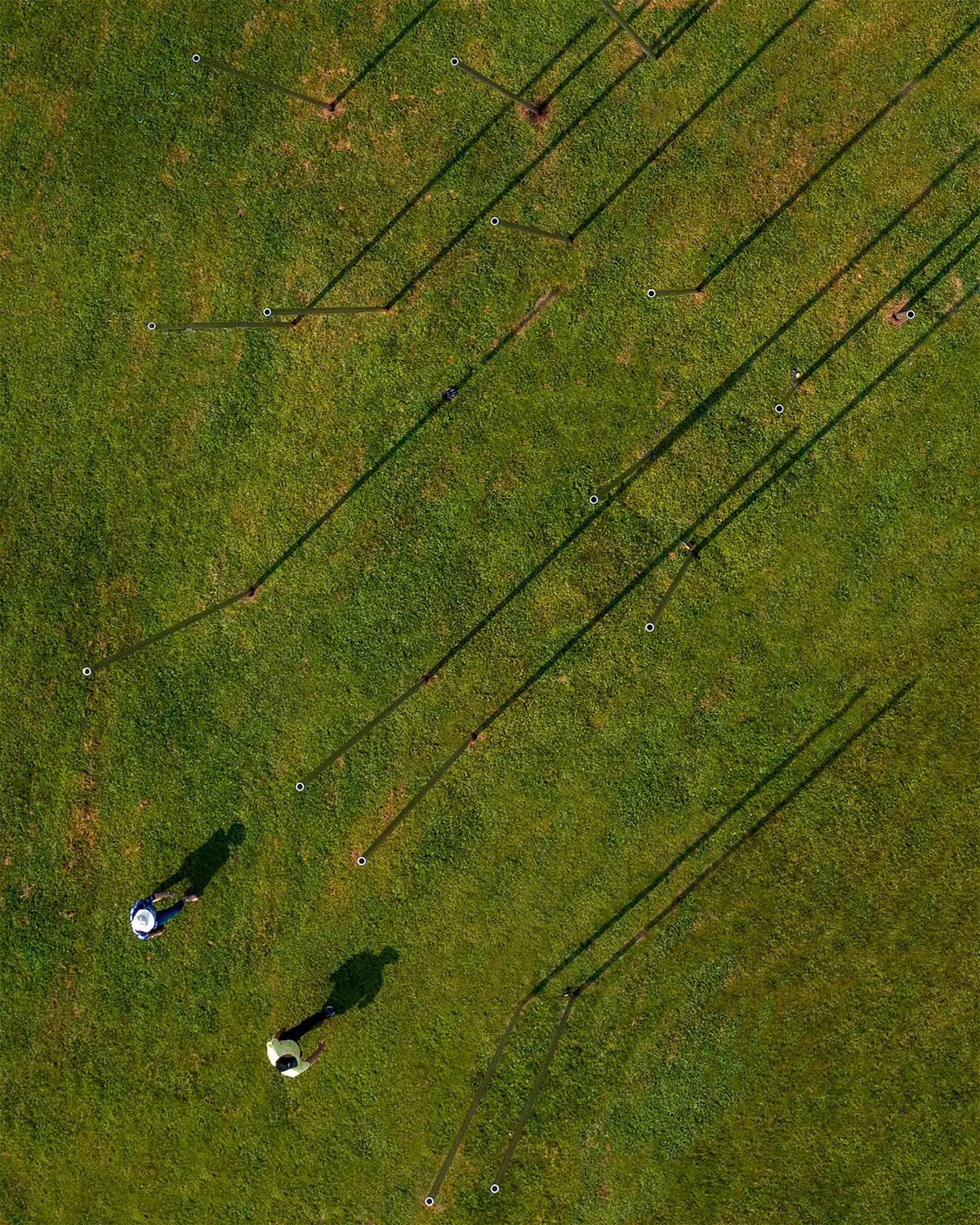
One may legitimately question whether this work is architecture. I think this is a fair question, and interesting to speculate on. For one, this installation translates narrative into a spatial condition, which in turn renders colonialism into a visceral experience of disorientation and even seasickness. In fact, we discussed whether the narratives should be accessible to viewers digitally along with the physical experience and decided for it; that it should be both visceral and have textual clarity. There is a strange synthesis which happens between the text in the field which is a physical and spatial condition: powerful words catch the eye from multiple poles simultaneously, speaking to the way we develop hierarchies in language. The difficulty of reading the texts fully, due to the physical and spatial demands of the work, confronts viewers with the problems of narration and storytelling, and positions the viewer in our shoes as curators and designers.